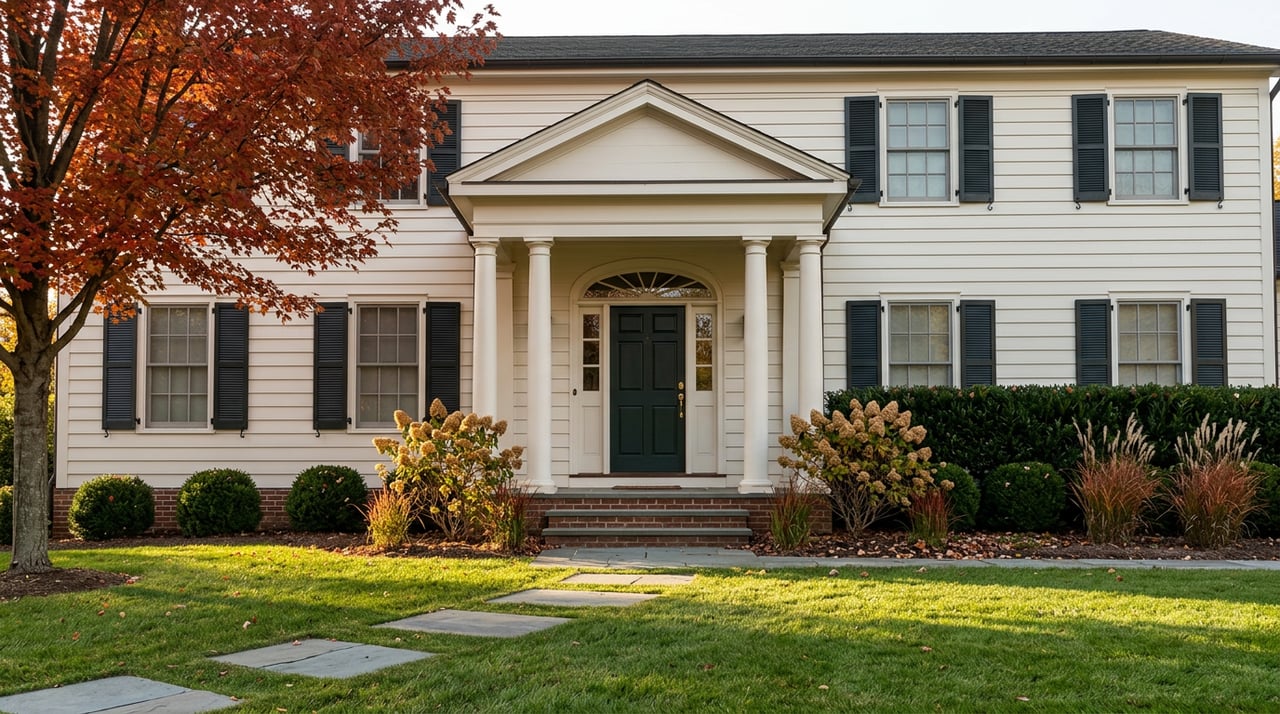
By 9 a.m. on the Saturday after Thanksgiving, the streets around Tamaques Park start filling with people who are not tourists. They live on Lamberts Mill Road, or two turns off it, and they know exactly which loop of the park the tents will be set up on this year because it has been the same loop for longer than most of them have owned their houses. This is not a race that Westfield imports for a weekend. It is a race the town built out of its own sidewalks, and more than four decades in, it still runs on the same basic assumption: the people showing up are your neighbors, not out-of-town spectators.
That assumption shapes almost every logistical decision behind the Westfield Turkey Trot, and it's the reason the event still works as well as it does. This year's race, set for Saturday, November 28, will be the 43rd running since the tradition started in 1984. That kind of unbroken run is rare for any town event, and it means the Trot has quietly become one of the few fixed points on Westfield's calendar that has never needed a relaunch, a rebrand, or a comeback tour.
The Number That Actually Matters
Forty-three sounds like a trivia answer until you set it against how most local traditions actually behave. Restaurants change hands. Festivals get rebooted with new names. Storefronts downtown turn over every few years. The Turkey Trot has done none of that. It has run every single Saturday after Thanksgiving since 1984, at the same park, off the same road, without a gap.
That continuity is not an accident of scheduling. It is the product of a race that has stayed small enough to be organized by two outside groups, Sports A/R and BestLife.Events, without ever needing to become a spectacle. The timing still runs through B-Tag chip technology via BestRace.com, the same setup a mid-size local race would use, not the kind of production a major marathon requires. Nothing about the Trot has scaled up in ambition. It has simply kept happening, in the same place, at the same time of year, for over four decades.
Three Races, One Very Tight Hour
What has changed is the range of people the race tries to serve in a single morning. In a recent year, the schedule looked like this:
| Race | Start Time | Distance | Built For |
|---|---|---|---|
| 5280 Run | 10:15 a.m. | 1 mile | Competitive runners 15 and up, USATF-NJ Grand Prix points |
| PracticeHard Mile | 10:40 a.m. | 1 mile | Families, kids, walkers, all paces, ribbons to every finisher |
| 5 Mile Turkey Trot | 11:15 a.m. | 5 miles | Distance runners, with a separate division for military and veterans |
Exact start times can shift slightly year to year, so it is worth checking the official registration page closer to race day, but the shape of the morning has held: three distinct races, staggered about twenty-five minutes apart, all launching from the same spot in Tamaques Park. Guided warmups led by Out Run Your Fork bridge the gaps between races, which means there is rarely a dead stretch of standing around in the cold.
The design choice here is deliberate. A serious runner chasing USATF-NJ Grand Prix points and a six-year-old running the PracticeHard Mile for a ribbon are using the same starting line, the same morning, and the same finish chute, just at different hours. That is a harder scheduling problem than it looks like on paper, and it is why the event has kept its three-tier structure rather than folding everyone into one mass start.
Where Everyone Actually Parks
The most practical piece of information in the entire event, and the one a first-timer will not find on a flyer, is that Tamaques Park has roughly 200 parking spots, and that lot closes at 10 a.m. or sooner if it fills first. Given that the 5280 Run starts at 10:15, arriving at 9:45 does not guarantee a spot inside the park.
Overflow parking exists on the surrounding residential streets, which is where the event's neighborhood character becomes a logistics issue rather than just a nice sentiment. Organizers ask runners to be mindful of driveways on those streets, because the people whose driveways get blocked are not race staff. They are the same residents who will be standing on their lawns in an hour cheering on the 5 Mile Turkey Trot as it passes their front steps. For anyone who actually lives within walking distance of the park, the organizers' own recommendation is the simplest one: skip the parking problem entirely and walk over.
The Course Runs Through Actual Driveways
That is the detail that separates the Turkey Trot from a downtown road race with barricades and street closures. The 5 Mile Turkey Trot runs on park roads and on the residential streets around Tamaques Park, not on a cordoned commercial strip. The 5280 Run loops entirely around the park itself. There is no stretch of the course that exists purely for spectacle. It is routed through the same blocks where people actually live, which is part of why the race feels less like an event that happens to Westfield and more like something the town does to itself once a year, on purpose.
What's Changed Since 1984, and What Hasn't
The date has not moved. The park has not moved. The core five-mile distance has not moved. But the race has picked up a handful of additions over the years that say something about what the town now expects from a long-running tradition, beyond just showing up.
The WeTrotTogether program sets aside a portion of registration and sponsorship revenue specifically to cover discounted or complimentary entries for runners who would otherwise be priced out. It is a quiet addition, easy to miss on the registration page, but it means the race has built in a mechanism for the person who wants to run but cannot justify the entry fee that year.
The TREES NOT TEES option lets any registrant skip the souvenir shirt and have a tree planted instead, with a certificate and a photo of the sapling sent afterward. Paired with a labeled drop box for recycling the tyvek race bibs and a standing ask that runners bring their own reusable water bottles, it is a small set of changes that nudge a forty-year-old race toward the sustainability habits its participants now expect from any event they sign up for.
None of these additions changed what the Trot fundamentally is. They just proved it could absorb new expectations without losing the thing that made it worth continuing in the first place.
The Part After You Cross the Line
The finish line experience has stayed almost defiantly analog. Hot soup and bagels wait at the end for anyone who finishes any of the three races. There is a carnival wheel to spin for prizes, face painting for kids who are done running for the day, and free photo downloads afterward courtesy of Jen Hinger Photography, who has photographed the race in recent years. None of it is elaborate. All of it is the kind of low-key payoff that makes sense for a race whose real purpose was never about production value.
If you are planning to run any of the three distances this year, or just planning to stand on your own front lawn and watch it go by, the practical advice has not changed from year to year. Arrive early if you want a spot in the park itself. Walk over if you can. Be patient with the cars parked along your street for a few hours on a Saturday morning, because in a few years it may be your own car parked on someone else's block while you run the 5 Mile.
Westfield's calendar fills up with new events almost every season, but few of them are built to last more than a decade, let alone four. The Turkey Trot was never designed to compete with whatever is new. It has simply outlasted the question, and it will likely still be running the same loop around Tamaques Park long after this year's newest additions have come and gone.
If you're weighing a move to a town where a single race can hold forty-three years of continuity without ever needing to reinvent itself, that kind of stability tends to show up in more than just the calendar. Kristen Lichtenthal works with families and homeowners across Westfield and the surrounding towns who are drawn to exactly this kind of neighborhood texture. Start the conversation whenever you're ready to talk about what it actually looks like to live here.