Trying to figure out which part of Westfield fits your lifestyle can feel harder than it should. The town is compact, full of character, and packed with distinct residential pockets that can look similar on a map but feel very different in person. If you want a clearer way to compare Westfield neighborhoods and housing styles, this guide will help you understand what the town’s historic areas, streetscapes, and home types really offer. Let’s dive in.
How to Think About Westfield
Westfield is often described by the town as a compact suburban community with a pedestrian-oriented downtown, a centrally located train station, tree-lined neighborhoods, and public parks and playgrounds. The town covers about 6.29 square miles and includes 211 acres of parks. That smaller footprint is part of what makes Westfield feel connected while still offering real variety from one area to the next.
One helpful thing to know is that Westfield is not commonly defined by one simple neighborhood map. Official preservation materials describe the town through a series of street-based historic areas and planned residential pockets. For a home search, that means it often makes more sense to compare sections of town by feel, street pattern, lot size, and housing style rather than by a single set of neighborhood boundaries.
Downtown Westfield and Central Pockets
Downtown Westfield is the town’s walkable core. Official materials place the district along East Broad Street from Prospect to Mountain Avenue and along Elm Street from East Broad to North Avenue, including the North Avenue Railroad Station. The Downtown Westfield Corporation also describes downtown as the center of community life and a pedestrian environment.
If you want easier access to shops, dining, and transit, this central area is usually the first place to consider. In practical terms, the downtown and East Broad/Mountain area tend to be the most central and walkable parts of town. That makes them especially appealing if daily convenience is high on your list.
East Broad and Mountain Area
The Presbyterian Church and Mindowaskin Park area forms part of Westfield’s civic heart. The district sits at East Broad and Mountain and is described in town documents as historically foundational to Westfield. Mindowaskin Park adds to that identity with its 12.6 acres, accessible playground, gazebo, gardens, memorial trees, and pond.
For buyers, this part of town often stands out because it combines a central location with a strong sense of place. You are near one of the community’s key public spaces, and the surrounding streets connect naturally to the larger downtown core. If you value a classic town-center setting, this area deserves a closer look.
Prospect Street and Nearby Blocks
Prospect Street, Ferris Place, and Ludlow Place are part of one of Westfield’s oldest remaining neighborhoods. Most of the homes in this pocket were built between 1865 and 1910, and the town presents the area as a visible bridge between Westfield’s farming-village roots and its railroad-suburb growth.
That history often shows up in the streetscape and in the age of the housing stock. If you are drawn to older homes and want to be closer to the historic core, this area can offer that sense of continuity. It is one of the places where Westfield’s early development pattern is easiest to see.
Historic Residential Areas to Know
Beyond downtown, Westfield includes several well-known residential pockets that each have their own rhythm. Some are closer to the center, while others feel more planned, more spacious, or more tucked away. Understanding those differences can make your search much more efficient.
Boulevard
Boulevard is one of Westfield’s grand residential corridors. The town describes the 500 and 600 blocks as lined with large late-19th- and early-20th-century houses, generous setbacks, mature trees, and spacious medians.
The 500 block leans earlier and more Queen Anne in character. The 600 block adds more Colonial Revival, Shingle Style, Four Square, and Craftsman homes. If you are looking for architectural variety and a more stately streetscape, Boulevard is one of the clearest examples in town.
Dudley Park and Kimball Avenue
Dudley Park and Kimball Avenue form a cohesive late-19th- and early-20th-century residential area tied to the north-side station era. According to the town’s plan, the original Dudley Park development began in the 1860s, and construction accelerated after the 1892 railroad station. The Kimball Avenue section between Elm Street and Lawrence Avenue is formally designated as a historic district.
This area can appeal to buyers who like homes with history and a connection to Westfield’s commuter-era growth. It also reflects how the railroad shaped the town’s residential pattern. That gives the neighborhood a distinct story, not just a distinct look.
Terrace Park and Tremont Avenue
Terrace Park and Tremont Avenue represent a classic commuter-era subdivision. The town notes that this more than 100-acre area was actively marketed to New York City commuters, and the housing mix is mostly Four Square, Colonial Revival, and Shingle Style homes on wide lots with large porches.
If you picture early suburban Westfield, this is one of the pockets most likely to match that image. The lot sizes, porch-forward homes, and prewar architecture create a strong sense of traditional neighborhood design. Buyers who want a classic commuter-suburb feel often gravitate here.
Stoneleigh Park
Stoneleigh Park is a smaller planned neighborhood dating to about 1900. The town describes it as having a park-like internal roadway, ample lots, and 40-foot setbacks.
The earliest homes are Colonial Revival, while later homes add Tudor Revival. The last group includes both contemporary and Colonial Revival examples. If you prefer a more planned setting with room between houses, Stoneleigh Park offers a noticeably different experience from the tighter, more central streets near downtown.
Westfield Gardens
Westfield Gardens is a wedge-shaped early-20th-century neighborhood bordered by Highland and Mountain Avenues. Town documents describe it as a tree-lined area with Colonial Revival, Period Revival, and Craftsman homes, built mainly in the 1920s and 1930s, with later Tudor Revival extensions.
This pocket offers a strong mix of prewar character and neighborhood consistency. For many buyers, that can mean a nice middle ground between architectural charm and a familiar suburban layout. It is one of the clearest examples of Westfield’s early-20th-century residential growth.
Wychwood
Wychwood is a 1920s enclave with curving streets, large lots, and a strong concentration of Colonial Revival and Tudor Revival homes. It centers on Wychwood Road and nearby streets between East Broad Street and Woodland Avenue, with a main entrance at Wychwood Road and East Broad Street.
Among Westfield’s residential pockets, Wychwood stands out for its planned layout and larger-scale setting. If you are looking for more separation between homes and a tucked-away feel, it is one of the areas most often associated with that experience. The architecture also tends to feel especially cohesive.
Westfield Housing Styles Explained
Westfield’s housing story is layered rather than one-note. You will find homes from the late 19th century, commuter-era prewar development, and later 20th-century expansion. That mix gives buyers more flexibility if you are prioritizing walkability, lot size, or architectural character.
Queen Anne Homes
Queen Anne is one of Westfield’s defining late-19th-century styles. The town’s design guidelines describe these homes as expressive and detailed, often featuring mixed materials, elaborate millwork, art glass, towers, turrets, balconies, and projecting bays.
In Westfield, Queen Anne homes show up prominently in places like Boulevard and other streets near the historic core. If you are drawn to homes with more ornament and visual personality, this is the style to watch for. These houses often make a strong first impression.
Colonial Revival Homes
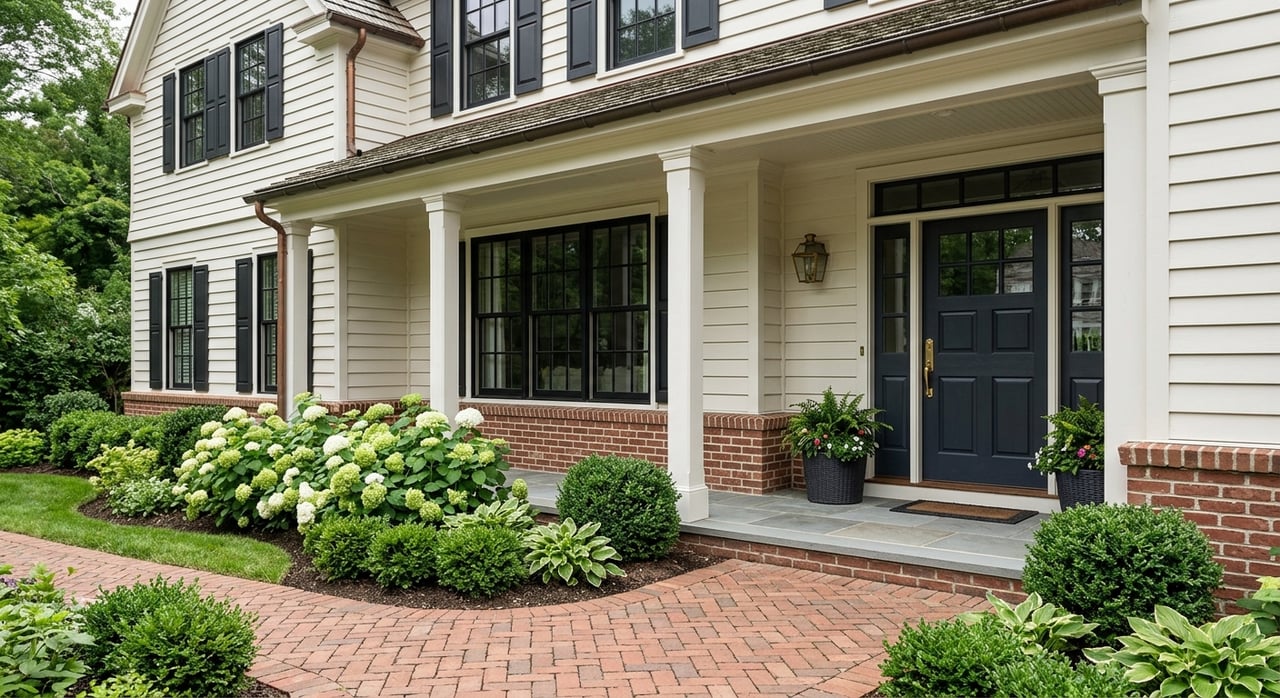
Colonial Revival is one of the most widely repeated early-20th-century styles in town. Westfield’s guidelines describe it as a revival of colonial traditions, usually with larger scale than original colonial homes, large windows, accentuated front doors, and columned porches or porticos.
This style is especially strong in Terrace Park and Westfield Gardens. If you want a house with a familiar, timeless exterior and broad buyer appeal, Colonial Revival homes often fit that description. They are a major part of Westfield’s architectural identity.
Shingle Style Homes
Shingle Style homes offer a softer, more relaxed look that evolved from Queen Anne architecture. In Westfield, they typically feature continuous shingle siding, broad gables or gambrels, large porches, grouped windows, and a more informal feel.
You are most likely to see this style in Boulevard and Terrace Park-era streets. Buyers who like older homes but want something less ornate than Queen Anne often respond well to Shingle Style. It can feel classic without feeling overly formal.
Four Square Homes
Four Square homes are practical and easy to identify once you know the basics. They usually have a cubical form, a hipped or pyramidal roof, a full front porch, and a raised basement.
Westfield’s guidelines note that many local Four Squares also include Colonial Revival details. This style appears often in commuter-era neighborhoods and can be a good fit if you like straightforward layout and early suburban character. It is simple, balanced, and very much part of the town’s prewar housing mix.
Craftsman Homes
Craftsman homes are often recognized by low-pitched roofs, wide eaves, exposed rafters, and tapered porch posts. In Westfield, examples appear in Boulevard, Westfield Gardens, and other early-20th-century streets.
This style tends to appeal to buyers who like architectural detail that feels warm and grounded. Compared with more formal revival styles, Craftsman homes often read as more casual and approachable. They add another layer to Westfield’s housing variety.
Tudor Revival and Period Revival Homes
Tudor Revival and related Period Revival homes bring a more storybook look to the streetscape. The town describes them as having steep gables, cross gables, elaborate chimneys, stucco or brick walls, half-timbering, and leaded-glass casements.
These homes are especially visible in Wychwood, parts of Westfield Gardens, and some Stoneleigh Park homes. If you want a house with strong architectural identity, this category often stands out quickly. The look is distinctive and easy to recognize.
Cape Cod and Ranch Homes
Cape Cod and Ranch homes are generally more compact and arrived later than many of the town’s prewar styles. Westfield’s guidelines describe Cape Cods as 1.5-story Colonial Revival subtypes from the 1920s through the 1940s, while ranch homes are low-slung one-story postwar houses with broad eaves and picture windows.
If you are looking for a simpler footprint or a later-era layout, these homes can be worth watching for. They add another option beyond the larger, more formal houses found in some of Westfield’s historic districts. For many buyers, they offer a more understated take on suburban living.
How to Compare Areas by Lifestyle
A simple way to narrow your search is to start with how you want your day-to-day life to feel. Westfield’s official materials support a few broad patterns that can help you compare areas, even though these are not formal neighborhood classifications.
If walkability is your top priority, downtown, Prospect Street, and the East Broad/Mountain civic area are strong starting points. If you want a quieter, more planned setting with larger lots, Stoneleigh Park and Wychwood tend to stand out. If you love the classic early-suburban commuter look, Terrace Park, Boulevard, and Westfield Gardens are often the clearest fit.
Transit and Parks Matter Too
Westfield’s layout is closely tied to commuter access. The town says residents use train, bus, and highway access for fast travel, and NJ Transit lists Westfield Station on the Raritan Valley Line. NJ Transit also lists bus route 113 serving Westfield, and the station area includes municipal and NJ Transit parking with permit and daily options.
Parks also play a big role in how different parts of town feel. Brightwood Park is a 44-acre nature preserve with 1.6 miles of trails and birding. Gumbert Park is an 8.3-acre neighborhood park with ballfields, a rink, and a playground, while Memorial Park is a 19.1-acre park and pool complex.
Tamaques Park is the town’s largest park at 106 acres and includes picnic areas, fields, courts, playgrounds, a pond, and a jogging path. Together with Mindowaskin Park, these public spaces help shape the experience of living in Westfield. When you compare homes, it is smart to compare nearby parks and daily routes too, not just square footage and style.
Why Westfield Appeals to Many Buyers
One of Westfield’s biggest strengths is that it offers multiple versions of suburban living within one compact town. You can find prewar streets close to the core, planned commuter-era enclaves, and later Cape Cod and ranch inventory on the edges. That gives you room to choose based on what matters most to you.
For some buyers, that means prioritizing walkability and access to downtown. For others, it means seeking larger lots, curving streets, or a favorite architectural style. Either way, understanding Westfield through its neighborhood pockets and housing patterns can help you search with much more confidence.
If you want help narrowing down which part of Westfield fits your goals, working with a local agent who knows how these pockets differ can save you time and stress. When you are ready to talk through your move, connect with Kristen Lichtenthal for thoughtful, high-touch guidance rooted in Westfield experience.
FAQs
What are the most walkable areas in Westfield, NJ?
- Westfield’s official materials point most clearly to downtown, Prospect Street, and the East Broad/Mountain area as central, walkable pockets.
What housing styles are common in Westfield, NJ?
- Common Westfield housing styles include Queen Anne, Colonial Revival, Shingle Style, Four Square, Craftsman, Tudor Revival, Cape Cod, and Ranch.
Which Westfield neighborhoods have larger lots?
- Based on town descriptions, Stoneleigh Park and Wychwood are two of the clearest examples of more planned settings with larger lots.
Where can you find historic homes in Westfield, NJ?
- Historic homes are found in areas such as Boulevard, Prospect Street, Ferris Place, Ludlow Place, Dudley Park/Kimball Avenue, Terrace Park, Westfield Gardens, Stoneleigh Park, and Wychwood.
Does Westfield, NJ have train access?
- Yes. NJ Transit lists Westfield Station on the Raritan Valley Line, and the station area includes both municipal and NJ Transit parking options.
How should buyers compare Westfield neighborhoods?
- A practical approach is to compare areas by walkability, lot size, architectural style, park access, and proximity to the downtown core and station.